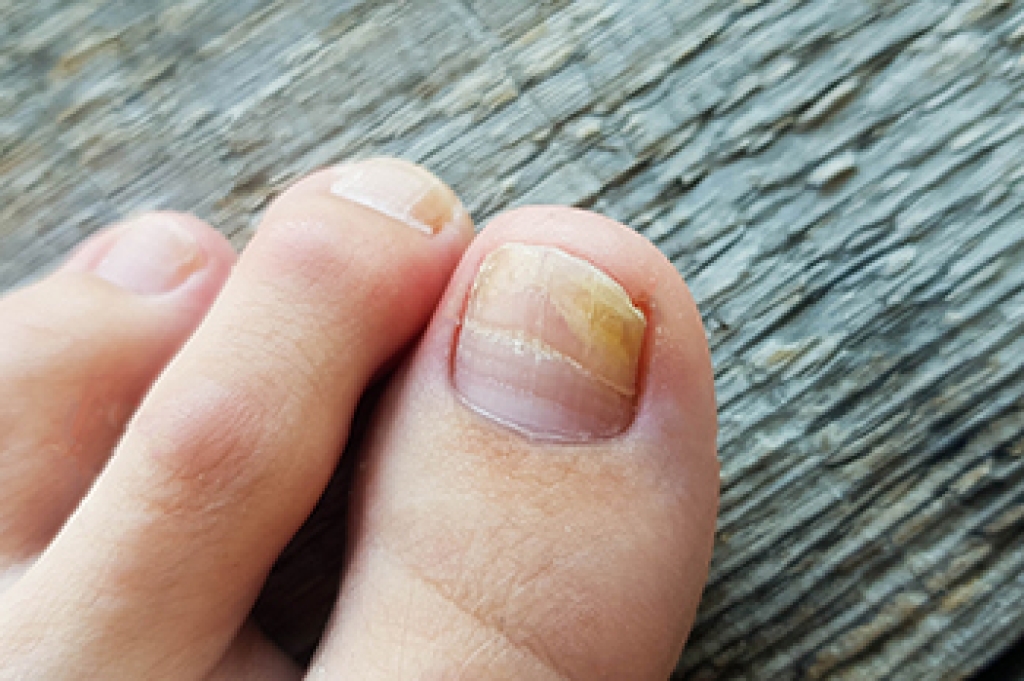
Toenail fungus, medically called onychomycosis, is an infection that can change the color, thickness, and texture of a toenail. It develops when fungi enter the nail through small cracks or openings around the nail. Several types of fungi can cause an infection, including dermatophytes, molds, and yeast. An infected nail may become yellow, white, or brown. It can also become thick, brittle, or separated from the nail bed. Early treatment can help prevent the infection from becoming more difficult to manage.
Dermatophytes are the most common cause of toenail fungus. These fungi feed on keratin, which is found in nails and skin. A dermatophyte infection often causes thickened nails with yellow or white discoloration. Mold can also infect toenails, particularly when the nail has been damaged. Mold infections may cause unusual colors and changes in nail texture. Yeast infections are less common, but can affect damaged nails. The nail may become discolored, thick, or distorted. Different infections can look similar, so appearance alone may not identify the exact cause.
Several risk factors can increase the chances of developing toenail fungus. Warm, damp environments allow fungi to grow easily. Wearing sweaty shoes, walking barefoot in communal areas, or having a previous nail injury can increase exposure. Older adults may also face greater risk because toenails grow more slowly. A podiatrist can examine the nail and may collect a sample for testing when needed. Treatment can then be selected based on the infection and its severity.
Treatment may involve prescription medication, topical therapy, or other options recommended by your podiatrist. Thickened portions of the nail may be trimmed or reduced to improve treatment access. Keeping feet clean and dry can also help protect healthy nails. Toenail fungus can take time to clear because nails grow slowly. If you have signs of toenail fungus, it is suggested that you consult a podiatrist for effective treatment solutions, which may include prescribed medication.
If left untreated, toenail fungus may spread to other toenails, skin, or even fingernails. If you suspect you have toenail fungus it is important to seek treatment right away. For more information about treatment, contact one of our podiatrists of Bergen Foot & Ankle. Our doctors can provide the care you need to keep you pain-free and on your feet.
Symptoms
- Warped or oddly shaped nails
- Yellowish nails
- Loose/separated nail
- Buildup of bits and pieces of nail fragments under the nail
- Brittle, broken, thickened nail
Treatment
If self-care strategies and over-the-counter medications does not help your fungus, your podiatrist may give you a prescription drug instead. Even if you find relief from your toenail fungus symptoms, you may experience a repeat infection in the future.
Prevention
In order to prevent getting toenail fungus in the future, you should always make sure to wash your feet with soap and water. After washing, it is important to dry your feet thoroughly especially in between the toes. When trimming your toenails, be sure to trim straight across instead of in a rounded shape. It is crucial not to cover up discolored nails with nail polish because that will prevent your nail from being able to “breathe”.
In some cases, surgical procedure may be needed to remove the toenail fungus. Consult with your podiatrist about the best treatment options for your case of toenail fungus.
If you have any questions please contact our offices located in Fort Lee, NJ and Flushing, NY . We offer the newest diagnostic and treatment technologies for all your foot and ankle needs.
