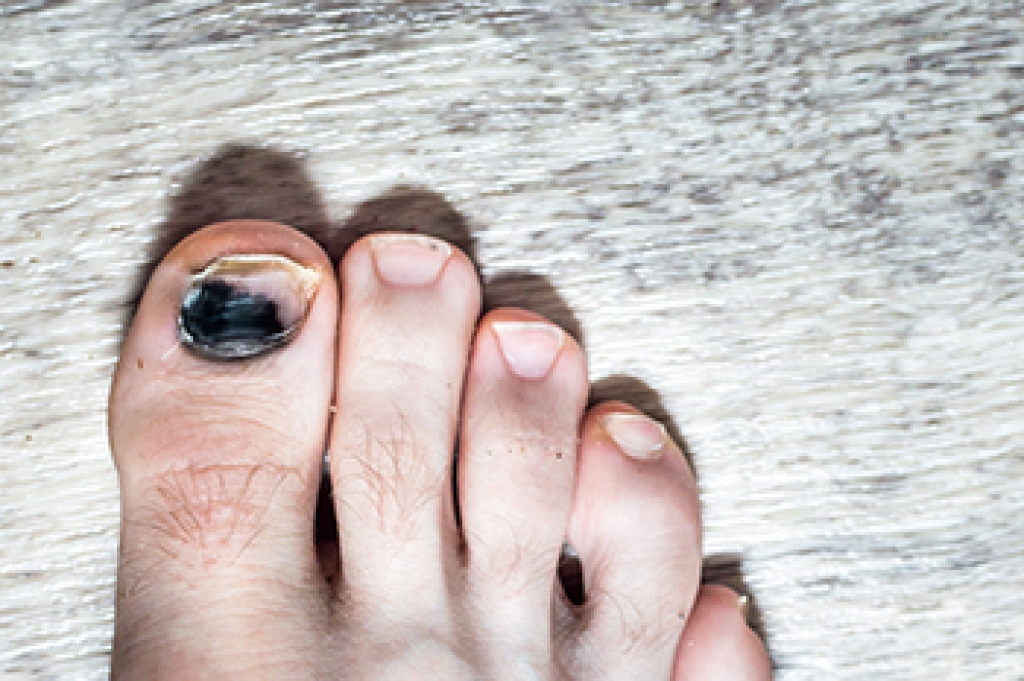
A black toenail can develop when blood, debris, or pigment collects beneath or within the nail. Repeated pressure from wearing tight shoes can injure the toe, especially while running or hiking. A dropped object can also break tiny blood vessels under the nail and cause sudden pain, swelling, and dark color. Fungal infections sometimes thicken the nail and create debris that makes it look black. Natural pigment changes can produce dark streaks, particularly in people with darker skin. Less frequently, a black nail can point to diabetes, kidney disease, or heart disease. It can also be a sign of melanoma, a serious form of skin cancer.
A podiatrist should examine a black toenail when its cause is unclear. An exam is also needed if the nail changes shape or discoloration does not grow out naturally. The podiatrist can determine whether discoloration comes from trapped blood, infection, or pigment. Testing a small nail sample can help confirm fungus. A tissue sample may be examined when the dark area has features linked to melanoma. Prompt evaluation is especially important when discoloration spreads onto nearby skin, if pain becomes intense, or if drainage develops.
A podiatrist can make a tiny opening in an injured nail to release trapped blood and ease pressure. The doctor can remove damaged nail material or treat an infection. Suspicious pigment changes can be tested, and care with a skin-cancer specialist can be arranged. To reduce injury risk, choose well-fitting shoes with enough toe room and proper support. Keep toenails trimmed straight across. Protective shoes can help when work creates a risk of heavy objects falling on the feet. Regular foot checks make new color changes easier to notice. If you have toenails that appear black or discolored, it is suggested that you schedule an appointment with a podiatrist for a diagnosis and appropriate treatment.
Toe pain can disrupt your daily activities. If you have any concerns, contact one of our podiatrists of Bergen Foot & Ankle. Our doctors can provide the care you need to keep you pain-free and on your feet.
What Causes Toe Pain?
Most severe toe pain is caused due to a sports injury, trauma from dropping something heavy on the toe, or bumping into something rigid. Other problems can develop over time for various reasons.
Toe pain can be caused by one or more ailments. The most common include:
- Trauma
- Sports injury
- Wearing shoes that are too tight
- Arthritis
- Gout
- Corns and calluses
- Hammertoe
- Bunions
- Blisters
- Ingrown toenails
- Sprains
- Fractures (broken bones)
- Dislocations
When to See a Podiatrist
- Severe pain
- Persistent pain that lasts more than a week
- Signs of infection
- Continued swelling
- Pain that prevents walking
Diagnosis
In many cases the cause of toe pain is obvious, but in others, a podiatrist may want to use more advanced methods to determine the problem. These can range from simple visual inspections and sensation tests to X-rays and MRI scans. Prior medical history, family medical history, and any recent physical traumatic events will all be taken into consideration for a proper diagnosis.
Treatment
Treatments for toe pain and injuries vary and may include shoe inserts, padding, taping, medicines, injections, and in some cases, surgery. If you believe that you have broken a toe, please see a podiatrist as soon as possible.
If you have any questions please contact our offices located in Fort Lee, NJ and Flushing, NY . We offer the newest diagnostic and treatment technologies for all your foot and ankle needs.
